
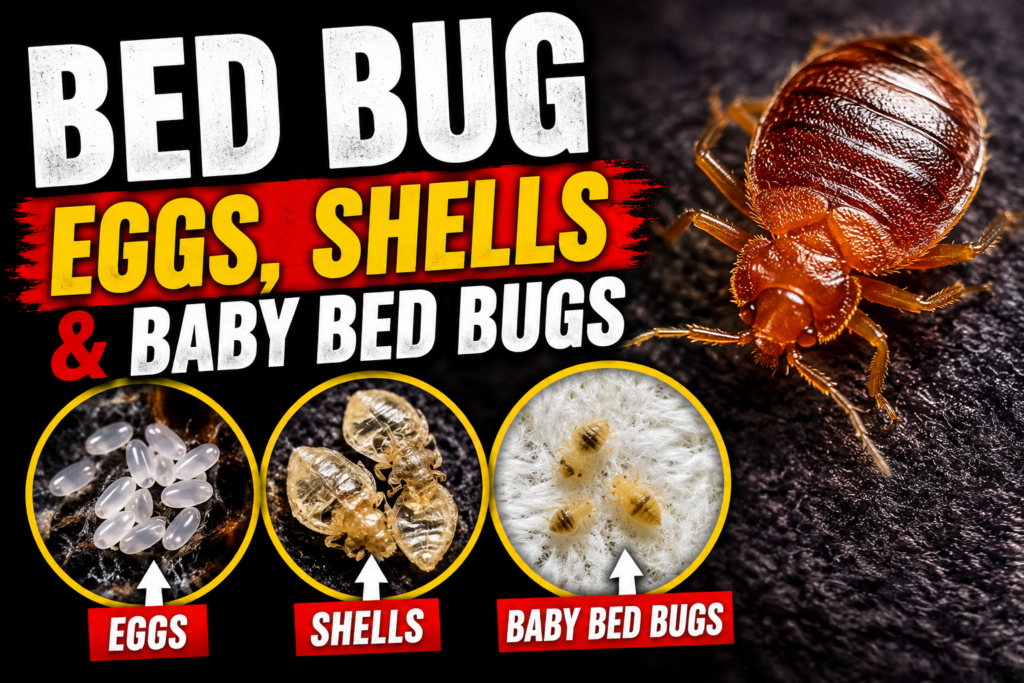
Finding signs of bed bugs can be unsettling, especially when you notice tiny white specks, shed skins, or small insects around your mattress and furniture. Understanding these early indicators is essential because bed bug infestations can grow rapidly when left untreated.
Among the most important signs to identify are bed bug eggs, which are often hidden in cracks, mattress seams, bed frames, and other protected areas close to where people sleep. These eggs are extremely small and can be difficult to spot without careful inspection, making early detection a challenge for many homeowners.
In addition to eggs, you may also encounter young bed bugs, discarded skins, and shell-like remains that indicate an active infestation. Learning how to recognize these signs can help you take action before the problem becomes more widespread. This guide explains what bed bug eggs look like, how baby bed bugs develop, and how to identify the various shells and shed skins they leave behind throughout their life cycle.
What Do Bed Bug Eggs Look Like?
One of the most common questions homeowners ask is, what do bed bug eggs look like? Bed bug eggs are tiny, oval-shaped, and usually pearl-white in color. They measure about 1 millimeter in length, making them roughly the size of a grain of salt. Because of their small size, they can easily blend into light-colored surfaces and remain unnoticed for weeks.
Female bed bugs typically lay eggs in hidden locations where they are protected from disturbance. Common hiding spots include mattress seams, box springs, bed frames, headboards, furniture joints, baseboards, and cracks in walls. The eggs are coated with a sticky substance that helps them adhere to surfaces, making them difficult to remove with simple cleaning.
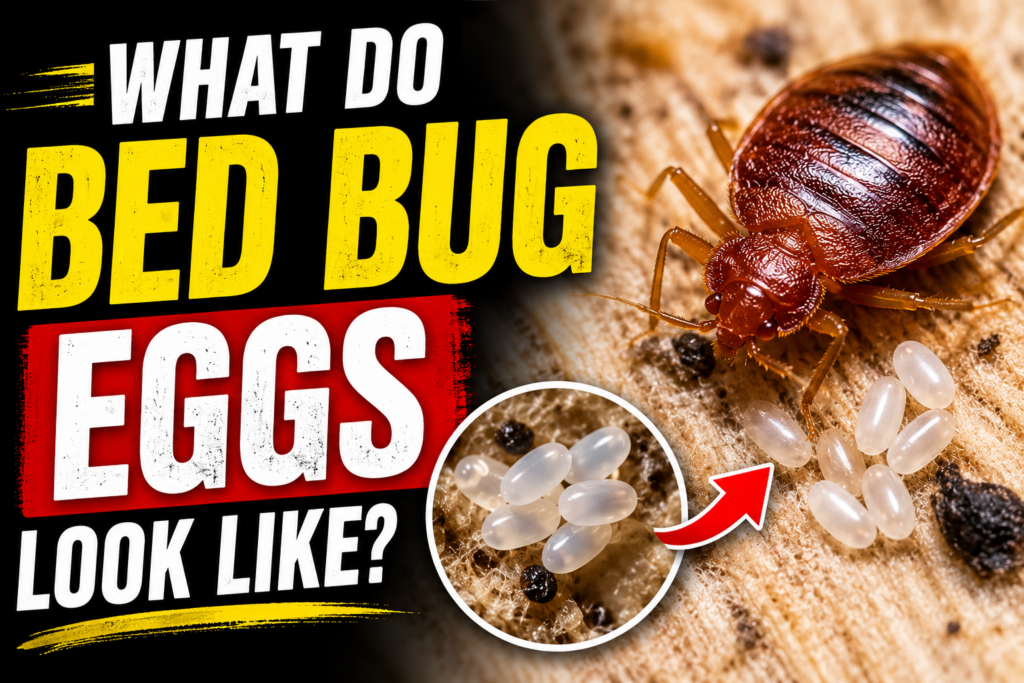
Freshly laid eggs often appear shiny and translucent, while older eggs may look slightly dull before hatching. Under favorable conditions, they generally hatch within one to two weeks, producing immature bed bugs that immediately begin searching for a blood meal.
When inspecting your home, it is important to look beyond the mattress itself. Clusters of eggs are often found alongside dark fecal spots, shed skins, and live insects. Finding multiple signs together is usually a stronger indication of an active infestation than discovering eggs alone.
Life Cycle of Bed Bug Eggs and Young Bed Bugs
After hatching, bed bug eggs produce immature insects known as a bed bug nymph. These young bed bugs closely resemble adults but are much smaller, lighter in color, and not yet capable of reproduction. Many people refer to them as baby bed bugs, and they can be difficult to detect because of their tiny size and nearly transparent appearance.
A newly hatched baby bed bug is typically pale white or yellowish until it takes its first blood meal. After feeding, its body becomes darker and more visible. As it grows, the nymph passes through several developmental stages before reaching adulthood. Each stage requires a blood meal, allowing the insect to continue developing and eventually reproduce.
The term bed bug larvae is sometimes used when describing young bed bugs, but technically bed bugs do not have a true larval stage like many other insects. Instead, they develop through a series of nymph stages, gradually increasing in size after each molt.
Under favorable indoor conditions, the journey from egg to adult can take only a few weeks. This rapid development is one reason infestations can spread quickly if early warning signs are ignored. Identifying young bed bugs during these early stages can make treatment more effective and help prevent a larger infestation from becoming established.
Bed Bug Shells and Shed Skins: What They Mean
As young bed bugs grow, they must periodically shed their outer covering in a process known as bed bug shedding. During this process, the insect leaves behind a hollow outer layer that closely resembles a live bed bug. These remains are often one of the clearest signs of an active infestation.
Many people mistake bed bug shells for dead insects because they retain the shape of the bug that shed them. In reality, these shells are simply the discarded outer layer left behind as the insect develops into its next growth stage. Depending on the age of the insect, the shells may vary in size and color.
You may also hear these remains referred to as bed bug skin or bed bug shed skin. They are commonly found near hiding places such as mattress seams, bed frames, upholstered furniture, and cracks in walls. Since bed bugs tend to gather in groups, multiple shed skins are often discovered in the same area.
From a biological perspective, the discarded outer covering is known as a bed bug exoskeleton. Finding these exoskeletons, especially alongside eggs, fecal stains, or live insects, is a strong indication that bed bugs have been present and actively developing within the area. Regular inspections can help identify these warning signs before an infestation becomes more difficult to control.
Where to Find Bed Bug Eggs and Other Signs of Infestation
Locating bed bug eggs can be challenging because they are typically deposited in protected areas that are rarely disturbed. Bed bugs prefer dark, narrow spaces close to their food source, which is why bedrooms and sleeping areas are usually the first places to inspect.
Start by examining mattress seams, box springs, bed frames, headboards, and the edges of upholstered furniture. Pay special attention to cracks, screw holes, and joints where bed bugs can hide during the day. In more established infestations, eggs and other evidence may also be found behind wall hangings, electrical outlets, baseboards, and loose wallpaper.
While searching, look for more than just eggs. Small dark stains, live insects, shed skins, and clusters of white eggs often appear together. These signs provide a clearer picture of the infestation’s severity and can help determine how long the pests have been present.
Using a flashlight and a magnifying glass can make inspections more effective, especially when checking tight spaces. Because bed bugs are experts at hiding, thorough inspections are essential for early detection. The sooner signs are identified, the easier it becomes to prevent the infestation from spreading throughout the home.
How to Get Rid of Bed Bug Eggs and Prevent Reinfestation
Eliminating bed bugs requires more than removing visible insects. Because bed bug eggs are resistant to many common treatments, a comprehensive approach is necessary to stop the infestation from returning. Missing even a small number of eggs can allow a new generation of bed bugs to emerge within weeks.
Begin by thoroughly vacuuming mattresses, furniture, carpets, and cracks where bed bugs may be hiding. After vacuuming, immediately seal and dispose of the vacuum contents to prevent any surviving pests from escaping. Washing bedding, clothing, and washable fabrics in hot water followed by high-heat drying can also help destroy eggs and active bed bugs.
Heat is one of the most effective methods for controlling infestations because it can penetrate areas where chemicals may not reach. Professional heat treatments are often used to eliminate bed bugs throughout an entire room, including hidden eggs in difficult-to-access spaces.
To reduce the risk of reinfestation, regularly inspect sleeping areas, minimize clutter, and use protective mattress encasements. Travelers should also inspect luggage and clothing after returning home, as bed bugs can easily hitchhike from hotels, public transportation, and other shared environments.
For severe infestations, professional pest control services are often the most reliable solution. Experienced technicians can identify hidden harborages and apply targeted treatments designed to eliminate bed bugs at every stage of their life cycle.
Conclusion
Recognizing the early signs of a bed bug infestation can save homeowners time, money, and frustration. From identifying bed bug eggs to spotting young nymphs and discarded skins, each clue provides valuable information about the presence and development of these pests. Understanding where eggs are commonly found, how bed bugs grow, and why shed skins accumulate can make inspections more effective and improve the chances of early intervention.
Whether you discover eggs, live insects, or evidence of molting, taking prompt action is essential. Combining thorough inspections, proper cleaning practices, and professional treatment when necessary can help eliminate bed bugs and prevent future infestations from becoming a recurring problem.
Frequently Asked Questions
How long does it take for bed bug eggs to hatch?
Under normal indoor conditions, bed bug eggs typically hatch within 6 to 10 days. Temperature and environmental conditions can influence the exact hatching timeline.
Can you see bed bug eggs with the naked eye?
Yes, but they are very small. Bed bug eggs are about 1 millimeter long and appear as tiny white or pearl-colored ovals, making them difficult to spot without close inspection.
What color are baby bed bugs?
Newly hatched bed bugs are usually pale white or translucent. After feeding on blood, they become darker and easier to see.
Do bed bug shells mean you currently have bed bugs?
Not always, but finding shed skins often indicates that bed bugs have been present and developing in the area. Multiple shells found alongside other signs may suggest an active infestation.
Where are bed bug eggs most commonly found?
Bed bug eggs are commonly found in mattress seams, box springs, bed frames, furniture joints, baseboards, and other small cracks close to sleeping areas.
Can vacuuming remove bed bug eggs?
Vacuuming can help remove some eggs and bed bugs, but it may not eliminate all hidden eggs. A complete treatment plan is usually needed for effective control.