
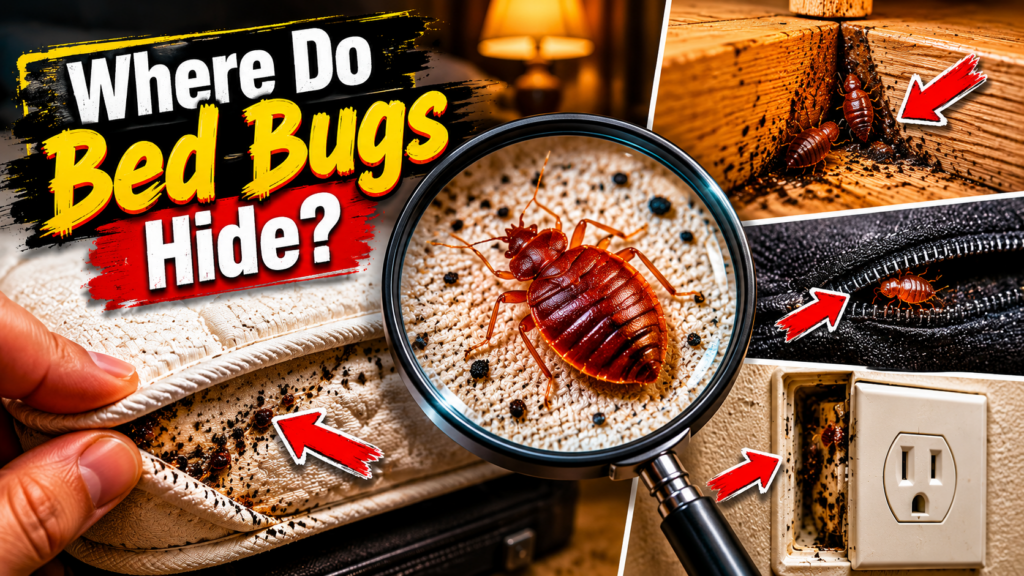
Bed bugs are small, reddish-brown insects that feed on human blood, usually while people sleep. Although they are tiny, they can quickly become a major household problem because they are excellent at hiding and reproducing. Many homeowners notice bites before they ever see an actual bug, which often leads to the question: where do bed bugs hide?
These pests prefer dark, narrow spaces close to their food source. Since humans spend several hours each night in bed, bedrooms are usually the first place bed bugs establish themselves. However, they are not limited to mattresses alone. Bed bugs can hide in furniture, wall cracks, carpets, electrical outlets, luggage, and many other overlooked areas throughout a home.
Understanding the common hiding places of bed bugs is essential for early detection and successful treatment. The sooner an infestation is identified, the easier it is to prevent it from spreading into multiple rooms. In addition to finding live bugs, homeowners should also know how to recognize other signs such as shed skins, eggs, droppings, and blood stains.
This guide explains where these pests typically stay, the warning signs to look for, and the areas you should inspect if you suspect an infestation.
Common Places Where Bed Bugs Hide in Bedrooms
Bedrooms provide the ideal environment for bed bugs because they offer easy access to sleeping hosts and countless places to remain hidden during the day. While most people associate bed bugs with mattresses, these pests can occupy many different locations within a bedroom.
Mattress Seams and Box Springs Are Primary Areas Where Bed Bugs Hide
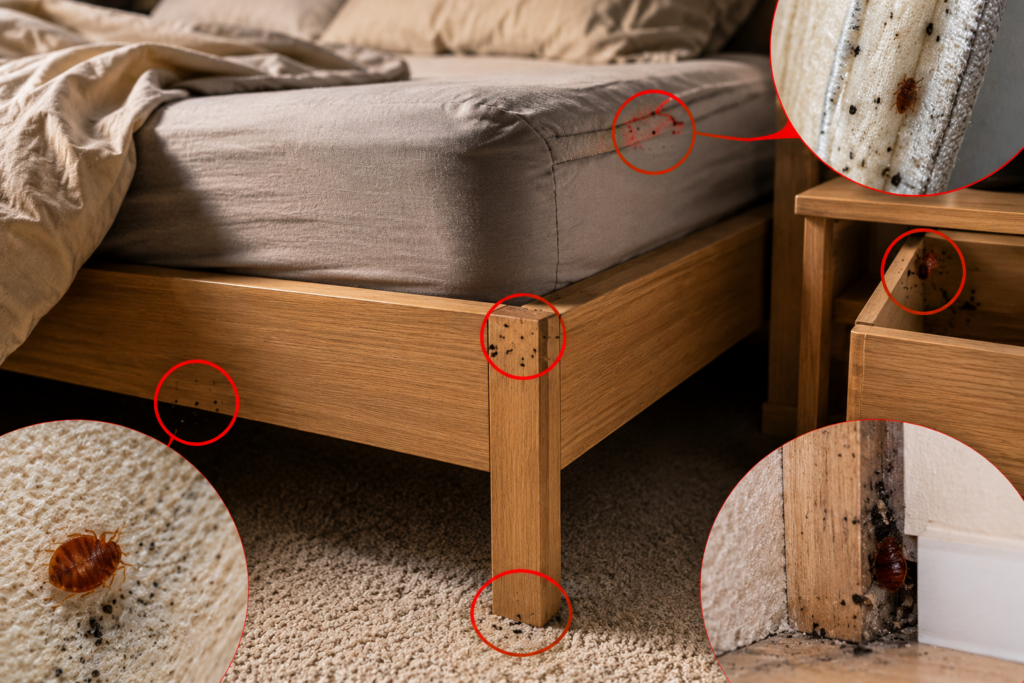
One of the first places inspectors check is the mattress. Bed bugs often gather along seams, piping, tags, and folds where they can remain concealed while staying close to a sleeping person. Box springs are equally attractive because their wooden frames, fabric coverings, and internal cavities create numerous hiding spots.
When examining a mattress, look for live insects, shed skins, tiny eggs, and dark spotting. You may also notice bed bug blood on bed surfaces if recently fed bugs were accidentally crushed during sleep.
Bed Frames and Headboards
Bed frames contain joints, screw holes, cracks, and crevices that provide excellent shelter. Wooden frames are particularly vulnerable because small gaps can be difficult to inspect thoroughly. Headboards mounted against walls can also harbor significant infestations.
Because these areas are close to the mattress, bed bugs can easily travel back and forth between their hiding spots and feeding locations without being detected.
Sheets, Pillowcases, and Bedding
Although bed bugs hide in mattress seams, bed frames, and nearby furniture rather than directly on sheets, their presence often leaves visible evidence behind. Homeowners may discover bed bug eggs on sheets, especially during larger infestations where available hiding spaces become crowded.
Another common warning sign is bed bug droppings on sheets. These dark spots may resemble ink marks and often appear near sleeping areas where bed bugs hide and feed during the night. Similarly, bed bug poop on sheets can leave small black or brown stains that do not easily brush away.
People frequently ask what does bed bug poop look like on sheets. In most cases, it appears as tiny dark dots created from digested blood. Likewise, homeowners wondering what do bed bug feces look like on sheets should look for clustered black stains around pillow edges, fitted sheets, and mattress seams.
Other Areas Where Bed Bugs Hide Throughout the Home
While bedrooms are the most common infestation sites, bed bugs are capable of spreading far beyond the bed itself. As populations grow, these pests begin searching for additional shelter in nearby rooms and furniture. Knowing where to inspect can help homeowners identify an infestation before it becomes severe.
Furniture and Upholstered Items Can Become Places Where Bed Bugs Hide
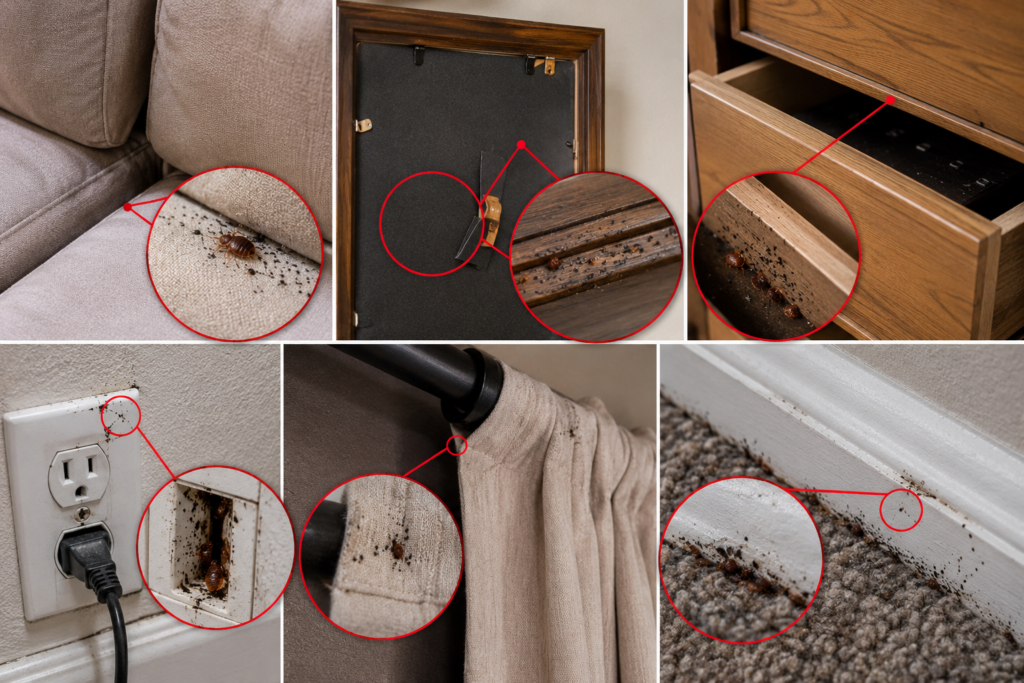
Bed bugs frequently infest couches, recliners, chairs, and other upholstered furniture. Seams, cushions, folds, and hidden fabric edges provide the same type of protection found in mattresses. This is especially common in homes where people spend long periods sitting or sleeping on sofas.
Many infestations spread from bedrooms to living rooms because bed bugs can travel through walls, clothing, and personal belongings. Inspecting furniture regularly is important when signs of activity appear elsewhere in the home.
Cracks, Baseboards, and Wall Voids
These insects can squeeze into openings as thin as a credit card. Cracks in walls, gaps around baseboards, loose wallpaper, and spaces behind picture frames often serve as long-term hiding locations.
In larger infestations, bed bugs may move deeper into wall voids and emerge only when they sense a nearby host. This behavior can make infestations difficult to eliminate without professional treatment.
Electrical Outlets and Household Clutter
Electrical outlets, light switch plates, and electronics create warm, protected environments that bed bugs find attractive. Cluttered areas also provide countless hiding opportunities, allowing infestations to expand unnoticed.
Stacks of books, storage boxes, clothing piles, and unused household items can all become shelter locations. Reducing clutter helps make inspections more effective and limits available hiding spots.
Do Bed Bugs Live in Carpet?
A common question homeowners ask is: do bed bugs live in carpet? Unlike fleas, bed bugs do not typically prefer carpet fibers as their primary habitat. However, they can hide along carpet edges, underneath carpeting, and near baseboards where small gaps are present.
Carpet alone rarely supports a major infestation, but it can provide temporary shelter as bed bugs hide and move between rooms. For this reason, homeowners should inspect carpet seams and perimeter edges when searching for signs of activity.
Luggage, Clothing, and Personal Belongings
Bed bugs are expert hitchhikers. They often spread by attaching themselves to luggage, backpacks, clothing, and other personal items. Travelers may unknowingly bring bed bugs home after staying in hotels, vacation rentals, or shared accommodations.
Once inside a home, the insects quickly seek protected locations near sleeping areas. Carefully inspecting luggage after travel can help prevent an infestation from becoming established.
Signs That Reveal Where Bed Bugs Stay
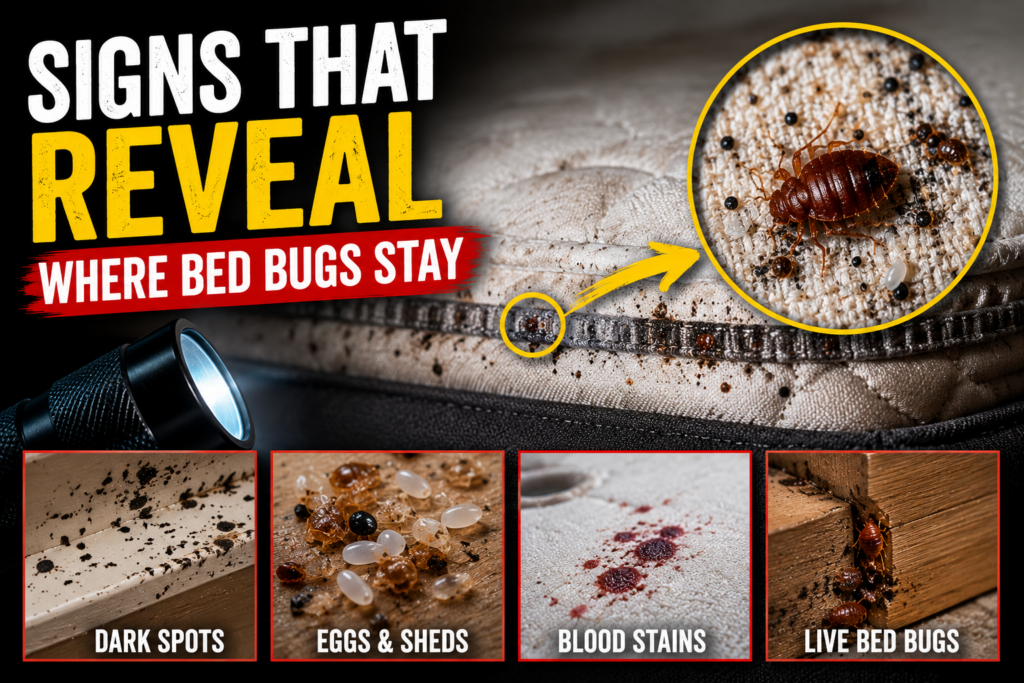
Finding the insects themselves is not always easy because bed bugs spend most of their time hidden. Fortunately, they leave behind several clues that can help homeowners identify an infestation. Learning to recognize these warning signs can reveal where do bed bugs stay and which areas require closer inspection.
Dark Droppings and Fecal Stains
One of the most common indicators of bed bug activity is the presence of dark fecal spots. These stains are created from digested blood and often appear near hiding places where bed bugs hide, such as mattress seams, headboards, furniture joints, and bedding.
The spots may resemble marks from a black marker and can smear when wiped with a damp cloth. Large concentrations of droppings often indicate that bed bugs have been active in the area for an extended period.
Tiny Eggs and Shed Skins
Female bed bugs lay small, pearl-white eggs that are approximately the size of a pinhead. These eggs are often found in cracks, mattress folds, furniture seams, and other protected spaces close to where the insects gather.
As bed bugs mature, they shed their outer skins multiple times. These pale yellow or translucent shells are frequently discovered near active hiding locations and can be an early warning sign of infestation.
Rust-Colored Blood Spots on Bedding
Blood stains are another common clue. Small rust-colored spots may appear on sheets, pillowcases, or mattresses when recently fed bed bugs are accidentally crushed during sleep.
Although occasional blood spots can have other causes, repeated staining combined with bites or droppings often points to bed bug activity. Inspecting nearby mattress seams, bed frames, and other areas where bed bugs hide can help locate the source.
Live Bed Bugs
The most obvious sign is finding live insects. Adult bed bugs are roughly the size of an apple seed and have flat, oval-shaped bodies that become more swollen after feeding.
Many homeowners wonder what do bed bugs look like on sheets. When visible, they usually appear as small reddish-brown insects crawling across bedding, pillowcases, or mattress surfaces. Because they prefer darkness, they are most often seen during nighttime hours or when disturbed during an inspection.
Unexplained Bites and Recurring Activity
Although bites alone cannot confirm an infestation, clusters of itchy bites that appear after sleeping may indicate bed bug activity. If bites continue to occur despite changing bedding or cleaning the room, a thorough inspection should be performed.
When bites are accompanied by droppings, eggs, shed skins, or blood stains, there is a strong likelihood that bed bugs are hiding nearby and professional treatment may be necessary.
How to Check Your Home for Bed Bugs
A careful inspection is one of the most effective ways to identify an infestation before it spreads. Because bed bugs are small and skilled at remaining hidden, homeowners should examine likely hiding places methodically rather than relying on a quick visual check.
Start With the Bed and Nearby Furniture
Begin by inspecting the mattress, box spring, bed frame, and headboard. Pay close attention to seams, folds, labels, screw holes, and cracks where insects can remain concealed during daylight hours.
Use a flashlight to examine dark areas and look for live bugs, eggs, shed skins, fecal spots, or blood stains. Since many areas where bed bugs hide are located within a few feet of a sleeping person, nearby nightstands, dressers, and upholstered furniture should also be inspected carefully.
Check Walls, Floors, and Hidden Spaces
After examining the bed, expand the search to surrounding areas. Inspect baseboards, carpet edges, wall cracks, loose wallpaper, curtain folds, and electrical outlet covers.
Bed bugs can travel surprisingly far when populations increase, making it important to investigate any small crevice that could provide shelter. Hidden spaces behind picture frames and under furniture are also worth checking.
Inspect Luggage and Personal Belongings
If bed bugs recently entered the home through travel, evidence may still be present in suitcases, backpacks, clothing, or storage containers. Carefully inspect seams, pockets, zippers, and folds where insects may be hiding.
Travel-related infestations often begin with only a few bugs, making early detection particularly valuable for preventing a larger outbreak.
Monitor for Ongoing Activity
Even if no insects are found during the first inspection, continue monitoring suspicious areas for signs of activity. New droppings, blood spots, shed skins, or bites can indicate that bed bugs are still present.
Regular inspections are especially important after treatment because surviving insects may remain hidden for weeks before becoming noticeable again.
Conclusion
Bed bugs are masters of concealment and can occupy far more locations than most homeowners realize. While mattresses, box springs, and bed frames remain the most common areas where bed bugs hide, infestations can also spread to furniture, wall cracks, electrical outlets, carpets, luggage, and other household items.
Recognizing warning signs such as eggs, fecal stains, shed skins, and blood spots can help detect an infestation early and reduce the risk of widespread contamination. The sooner bed bugs are identified, the easier and more effective treatment becomes.
By performing routine inspections and understanding the many places where bed bugs hide, homeowners can take proactive steps to protect their living spaces and address infestations before they grow into a larger problem.
Frequently Asked Questions
Can bed bugs hide in clean homes?
Yes. Bed bugs are attracted to people, not dirt or poor hygiene. Even very clean homes, apartments, and hotel rooms can develop infestations if bed bugs are accidentally brought inside through luggage, clothing, furniture, or other belongings.
How far can bed bugs travel from their hiding spots?
Bed bugs typically stay close to sleeping areas, but they can travel surprisingly far when searching for a host or expanding an infestation. In larger infestations, they may move between rooms through wall voids, electrical conduits, and small cracks.
Are bed bugs only found in mattresses?
No. Although mattresses and box springs are common hiding locations, bed bugs can also be found in bed frames, headboards, furniture, carpets, curtains, electrical outlets, luggage, and wall cracks. This is why a complete inspection is important.
Can you see bed bug eggs with the naked eye?
Yes. Bed bug eggs are small but visible to the naked eye. They are usually white or pearl-colored and about the size of a pinhead. Eggs are commonly found in mattress seams, furniture joints, and other protected crevices near active infestations.
What should I do if I find signs of bed bugs?
If you discover live bugs, eggs, droppings, shed skins, or blood stains, begin a thorough inspection immediately. Wash and dry bedding on high heat, reduce clutter, vacuum affected areas, and consider contacting a professional pest control company for confirmation and treatment, especially if the infestation appears widespread.